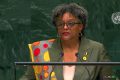
FORBES-The World’s Most Powerful Women In 2016 Ameenah Gurib Fakim:“For me, power is the ability to influence… by leaving behind a legacy, to me, that’s real power”
Three African women feature in today’s list of the 100 most powerful women in the world compiled by Forbes magazine. They include, Folorunshho Alakija, Ellen Johnson Sirleaf, and Ameenah Gurib-Fakim.
Folorunsho Alakija: (80th on the list) swtiched from the fashion industry to oil, to get involved in one of Nigeria’s largest deepwater discoveries as vice president of Famfa Oil.
Ellen Johnson Sirleaf: (83rd on the list) is commended for being able to “negotiate settlements, rebuild infrastructure, and lift sanctions” as president of Liberia after the civil war.
Ameenah Gurib-Fakim: (96th on the list) is “working to advance awareness of global warming” as president of Mauritius and formerly a biodiversity scientist.
Who are the world’s most powerful women this year? They are the smartest and toughest female business leaders, entrepreneurs, investors, scientists, philanthropists and CEOs making their mark in the world today. They’re women who are building billion-dollar brands, calling the shots in the financial markets, and crisscrossing the globe to broker international agreements and provide aid.
Their accomplishments are formidable on their own, and even more so given how hard it can be to establish inroads into industries and job titles traditionally dominated by men. Statistics on women in positions of power remain bleak. According to the latest survey by Catalyst, a nonprofit that tracks gender parity in the workplace, women occupy a measly 4% of corner offices at S&P 500 companies. And they hold only 25% of executive or senior-level jobs in those same firms.
Amidst sobering numbers like these, one offers new promise. Since 2005, the number of women who are world leaders—presidents or heads of state—had more than doubled by last year, according to the Pew Research Center.
Evidence of this trend is visible. In the past year alone, Taiwan, Myanmar, Nepal, Croatia, Mauritius, and Lithuania have elected or reelected female leaders to office. And of course, there is U.S. presidential candidate Hillary Clinton, who as of press time continues to hold the lead in the primaries.
This election-year “2016 Global Leaders” list honors these women, who join seasoned pros such as German Chancellor Angela Merkel, number-one Power Woman for six years running.
As with every year, four metrics were used: money (either net worth, company revenues, or GDP); media presence; spheres of influence; and impact, analyzed both within the context of each woman’s field (media, technology, business, philanthropy, politics, and finance) and outside of it.
With the advent of more women behind the presidential desk, we had to make some tough decisions—most notably, cutting the Celebrities category to make room. And so new leaders replace icons, with a spate of new countries joining the list.
Curating this year’s list inspired the usual reexamination of what it means to be powerful, and, more to the point, what it means to be powerful as a woman. Power can be subjective. Is it control, or is it influence?
Ameenah Gurib-Fakim, the first woman to become president in Mauritius, believes it’s the latter. “People say to have power, you hire and you fire,” she says. “I don’t subscribe to this notion. For me, power is the ability to influence. If you can influence in the long-term by leaving behind a legacy, to me, that’s real power.”
There is no doubt that the women on this year’s list are doing just that.
Bio data on Mrs Gurib-Fakim: A biodiversity scientist and the founder of the Centre for Pytotherapy Research, Ameenah Gurib-Fakim was immersed in compiling a database of the plants on her island, promoting the importance of biodiversity to an international audience through articles and at conferences. After Mauritius’ majority party asked her to become president, she stepped into the role in June 2015 with virtually no political experience on her résumé, yet with the unique opportunity to bring her perspective and concerns as a scientist to a larger audience. Now she’s working to advance awareness of global warming and to promote new investments in science and technology in Mauritius and greater Africa. She’s already making strides on both fronts, including partnering with the Bill and Melinda Gates Foundation to pilot 10 PhD research grants on the island, with plans expand the program to as many as 10,000 other scientists across Africa in the future.


 Posted by Minority Voice
on Jun 7 2016. Filed under Actualités, Economie, En Direct, Featured.
You can follow any responses to this entry through the RSS 2.0.
You can leave a response or trackback to this entry
Posted by Minority Voice
on Jun 7 2016. Filed under Actualités, Economie, En Direct, Featured.
You can follow any responses to this entry through the RSS 2.0.
You can leave a response or trackback to this entry